After ten winters of chasing snow from Vermont ice to Utah blower, I’ve stopped pretending the best base layer material for skiing — merino wool vs synthetic — has one clean winner. My verdict: synthetic base layers for resort laps and heavy sweat, merino for multi-day trips and damp cold. That call shapes every other decision about what goes under a ski jacket, because your base layer is the only piece actually touching skin.
Table of Content
Why Your Base Layer Material Changes Everything
How Merino Wool Works Against Your Skin
Merino’s edge is fiber chemistry, not marketing: wool absorbs water vapor into the core of each fiber while resisting liquid water, which is why it keeps insulating when damp and stays comfortable on a wet storm day. Odor control comes free, because bacteria find little to feed on in keratin. That single property explains most of what people call the wool advantage.
The practical payoff shows up on long trips: wherever laundry isn’t realistic — a four-day hut traverse, a week in a van — resistance to stink decides the answer more often than warmth does. The tradeoff: absorbed moisture lingers, so a saturated merino top can feel clammy until it finally dries, and thicker weights take a while.
What Synthetic Base Layers Do Better
Synthetic base layers work by staying hydrophobic: polyester and nylon move liquid sweat along the fabric to the surface, where it evaporates fast. They dry quickly, hold their shape, ignore moths, and cost a fraction of wool, which makes them the default for back-to-back ski days and hotel-sink laundry. Stretch blends with a little spandex also move better under a pack.
The bill comes due in odor: polyester traps body oils and bacteria, and antimicrobial finishes fade after a handful of washes. Nylon resists smell slightly better than polyester, but a synthetic shirt worn four days straight will announce itself in a hut. Wool sidesteps that entirely, which is why long-trip skiers keep paying for it.
How the Base Layer Fits the Rest of Your Stack
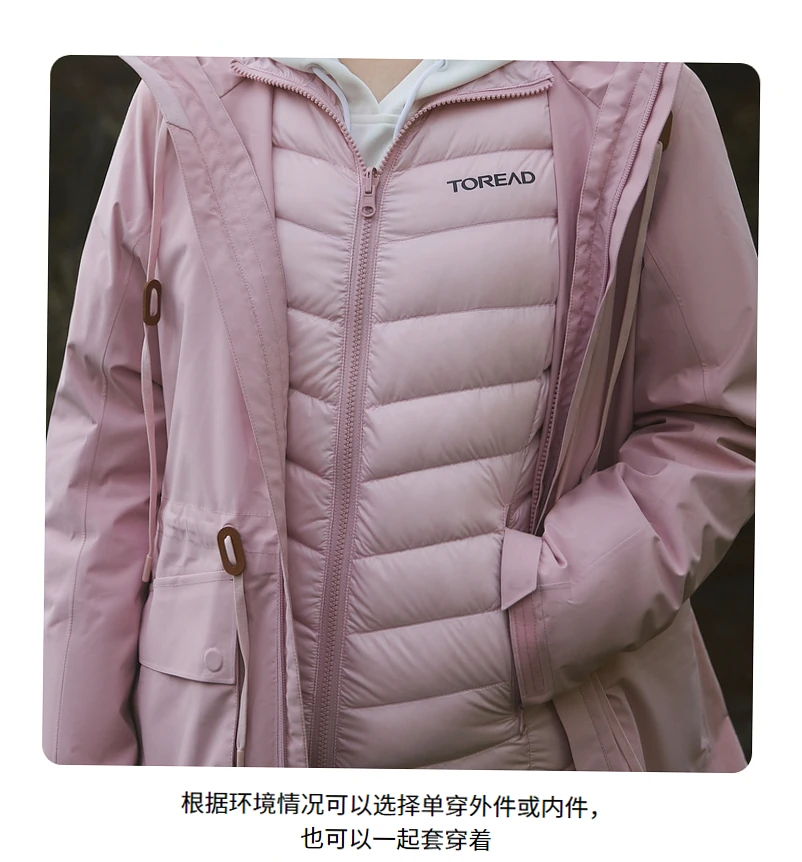
Every layer has one job: the base layer manages moisture, the mid layer insulates, and the shell blocks wind and snow. Expecting a thin merino or synthetic shirt to keep you warm on a 5°F chairlift ride is the most common mistake in ski layering, because that work belongs to the layer above.
That division of labor is also why insulation is a separate decision from fiber choice. If you’re still untangling whether to add a mid layer down jacket on cold days, settle that first, because it changes how thick your first layer needs to be. Solve the stack top-down, not fabric-first.
Which Material Wins: Warmth, Wicking, or Stink?
Odor Control: Merino’s Biggest Lead
On smell, merino wins outright and it isn’t close. A merino top can survive a week of sweating without turning offensive, while polyester starts hinting after one hard day and gets genuinely rough by day three. If you ski multi-day routes or share a hut, this single property outweighs every other difference between the fibers.
The exception proves the rule: antimicrobial synthetics buy you one or two fresh-feeling days, then odor creeps back as the treatment washes out. Merino-rich blends hold stink off far longer than pure polyester, which is why they dominate long-distance touring setups and ski-mountaineering packs where laundry is a fantasy.
Wicking Speed: Why Synthetics Dry First
Wicking is a different contest. Synthetic fabrics move liquid moisture faster and release it into the air quickly, so during hard resort laps they feel drier next to skin. Merino handles vapor well but holds onto what it absorbs, and a soaked wool shirt stays heavy and cool-feeling far longer than a comparable synthetic.
The annoying part: merino’s hollow fibers keep absorbed moisture close, so it can feel clammy the moment you stop moving in cold air. That isn’t a defect, it’s the same mechanism that keeps wool warm when wet. If you hate that damp sensation, size down a weight class or pick a mesh knit that dumps vapor faster.

Warmth for the Weight: Thickness Beats Fiber
Warmth tracks fabric weight and loft more than fiber identity. A 250 gsm merino crew beats a 150 gsm polyester tee every time, and a heavyweight grid-fleece synthetic can out-warm a thin wool layer. At identical thicknesses wool runs marginally warmer, but you can usually afford more synthetic thickness for the same money.
Where wool genuinely wins is warmth under pressure: a damp merino layer keeps insulating, while a saturated polyester layer loses much of its value. Where synthetic wins is value per gram of warmth, since thickness is cheap. Neither fiber replaces a proper mid layer on a genuinely cold day.
| Attribute | Merino wool | Synthetic (polyester or nylon) | What it means on the hill |
|---|---|---|---|
| Wicking speed | Handles vapor well, absorbs liquid slowly | Pushes liquid sweat to the surface fast | Synthetics feel drier during hard laps |
| Drying time | Slow, especially midweight and heavy | Often dry within an hour | Synthetic wins on back-to-back days |
| Warmth when wet | Keeps insulating when damp | Loses insulation when saturated | Merino is safer in wet snow |
| Odor resistance | Naturally resists smell for days | Builds odor fast; treatments fade | Merino wins multi-day trips |
| Durability | Thin weights hole and stretch | Holds shape for years | Synthetic wins cost per season |
| Typical cost | Roughly $80–150 per top | Roughly $30–70 per top | Synthetic is easier to replace |
| Feel on skin | Soft, but some skiers itch | Smooth and slick | Sensitive skin often prefers synthetic |
Merino vs Synthetic: Best Ski Scene Picks
Resort Days and Heavy Sweat
For lift-served skiing, synthetic usually wins on pure practicality. You sweat on the run, sit still on the chair, and repeat — conditions where quick drying matters far more than odor control. If you finish a resort day with a soaked base layer, treat that as a dressing problem rather than a fabric problem.
A practical pattern for resort skiers: start with a light synthetic, add a fleece or grid mid layer, and only escalate if you’re shivering on the lift. If you finish every run soaked through, your base layer isn’t the culprit — your whole stack is simply too warm for the pace you ski.
Multi-Day Traverses and Hut Trips
Flip the scenario and wool takes over. When you’re carrying everything and laundry is a fantasy, a merino top that smells acceptable on day five is worth more than a fast-drying synthetic that reeks by day two. Light merino bottoms and a midweight top cover most touring days, and many skiers notice little difference in leggings either way.
Packability matters too: two light merino tops often weigh less than the spare clothing you’d otherwise carry, and they survive repeated wear without offending your tentmate. A thin synthetic spare is still worth bringing for the sweatiest skinning sections, where drying speed beats odor resistance hands down.
Damp Cold East Coast vs Dry Powder West
Climate decides as much as skiing style. In wet coastal snow and freezing drizzle, merino’s warmth-when-wet behavior is a genuine safety feature, and blends of roughly 40–60% merino capture most of it with better durability. In dry, high-altitude powder, synthetics perform beautifully because your layers actually dry between runs.
Humidity is the quiet variable nobody mentions in gear reviews. Wool shines when the air is wet and your layers never fully dry out; synthetics shine when dry air wicks moisture quickly and your shirt is bone-dry by the next lap. If you ski both coasts, owning one of each fiber beats owning four of one.
| Scenario | Better pick | Reason it works |
|---|---|---|
| Resort laps, heavy sweat | Light synthetic | Dries between runs and costs less |
| Cold resort mornings | Midweight merino | Buffers temperature swings on the chair |
| Multi-day hut trip | Merino or merino-rich blend | Stays socially acceptable without washing |
| Wet coastal snow | Merino | Keeps insulating when soaked |
| Dry continental powder | Synthetic | Wicks fast and dries fully each run |
| Sensitive or itch-prone skin | Smooth synthetic | Avoids coarse-fiber irritation |
| Tight budget, few ski days | Synthetic | Best warmth per dollar with a good mid layer |
Merino vs Synthetic Base Layer Mistakes to Avoid
Buying Blends That Give You the Worst of Both
Blend ratios deserve a hard look before you pay premium money. Below roughly 40% merino, many fabrics inherit wool’s cost and fragility without enough of its odor resistance, which defeats the entire point. Above 60%, you’re essentially buying wool with a durability bonus. Read the fiber label, not the hang tag.
Also beware the wool label itself: merino is a breed, not a grade, and cheap blends with coarse fibers feel scratchy and wear through fast. Softness and durability pull in opposite directions, which is why the priciest option in the shop isn’t automatically the longest-lasting shirt in your rotation.
Ignoring Durability, Moths, and Wash Rules
Both fibers have failure modes nobody advertises. Thin merino develops holes, stretches at the cuffs, and feeds moths during summer storage. Synthetics survive abuse but degrade with hot water, high dryer heat, and fabric softener, which coats fibers and kills wicking. Cool washes, air drying, and rotation keep either material alive for multiple seasons.
Storage counts as much as washing. Merino left in a drawer over summer is an open invitation to moths, so seal it with cedar or a vacuum bag. Synthetics store fine but should skip softener entirely, because that coating quietly destroys the moisture-moving performance you paid for in the first place.
Trusting Marketing Claims Over Real Wear
Brand copy and slope reality diverge in predictable places. Wool warmth-when-wet is real, yet the shirt still feels heavy until it dries. Antimicrobial synthetics buy a day of freshness, not a week. The table below lines up the claims I see most often against what actually happens after a dozen honest days on snow.
| Claim on the tag | What actually happens |
|---|---|
| Keeps you warm even when soaked | True for insulation, but the shirt stays heavy and clammy until dry |
| Engineered to stay fresh | Fresh for a day or two, then odor returns as treatments wash out |
| The ultimate wicking layer | Manages vapor well, yet pure synthetics move liquid sweat faster |
| Blends give you the best of both | Only above roughly 40–60% merino; below that you inherit both weaknesses |
| Wool lasts a lifetime | Heavy weights can, but thin merino holes and hates hot drying |
| Synthetic is warmer for the weight | At equal thickness wool runs slightly warmer; synthetic wins when you buy thickness |
Building Your Ski Base Layer Kit Right
A Two-Weight Rotation Covers Most Seasons
You need fewer base layers than the internet suggests. A light synthetic top handles high-output resort days and spring corn, while a midweight merino (200–250 gsm) covers cold resort mornings, touring, and travel. Two tops and two bottoms, rotated so one set is always dry, outperform five mismatched pieces bought on impulse.
If you ski one resort a couple of weekends a season, one synthetic top and a decent fleece are genuinely enough. The classic mistake is buying premium merino for lift-served laps, where it wears out fast and rarely gets the multi-day stink test that justifies its higher price tag.
Care Habits That Double Base Layer Life
Care separates a two-season shirt from a seven-season shirt. Wash wool cool and gentle, skip the dryer entirely, and store it sealed against moths. Rinse synthetics with a technical wash instead of detergent-and-softener loads. Rotate layers so each one airs out between outings, and both fibers hold their performance far longer than the label promises.
Start by picking one fiber for your next trip rather than rebuying everything: synthetic if you sweat hard and ski single days, merino if you travel, tour, or ride wet cold. Then adjust thickness before you adjust material, because most cold-day complaints trace back to layer weight rather than wool versus polyester. Track how each shirt behaves for a month before spending again.
Merino vs Synthetic Base Layer Questions, Answered
Is merino wool actually warmer than synthetic for skiing?
At the same fabric weight, merino is slightly warmer and keeps insulating when damp, which matters in wet snow. At the same price, though, you can usually buy a thicker synthetic layer and end up warmer overall. Warmth also depends far more on your mid layer than on which fiber sits against your skin.
Why does my merino base layer feel clammy when I sweat?
Wool absorbs moisture into the fiber instead of pushing it outward, so a heavy sweat load lingers next to skin. You stay warm, but the shirt can feel damp and cool once you stop moving. Thinner weights, mesh knits, and blends with a synthetic inner face reduce that clammy sensation considerably.
Do synthetic base layers always end up smelling?
Eventually, yes — polyester traps body oils that bacteria feed on, and antimicrobial treatments fade with washing. Nylon blends resist odor a bit better than pure polyester, and a mid-trip rinse helps. If you regularly wear one shirt for several days straight, wool’s natural resistance is the more reliable answer.
Are merino wool blends worth it, or should I buy 100% merino?
Blends earn their place when merino content is high — roughly 40% and up — because you keep odor resistance while gaining durability and a friendlier price. Below that, you often pay wool money for a fabric that behaves like synthetic. For pure feel and cold-weather comfort, 100% merino still holds the edge.
How many ski base layers do I really need?
Two sets cover almost everything: one light synthetic for hard-sweat days and one midweight merino for cold or multi-day use. Add a heavyweight set only if you regularly ski deep cold. Rotation and air drying between outings do more for your comfort than owning five nearly identical shirts.
Can I wear a cotton t-shirt as a ski base layer?
No — cotton soaks up sweat and holds it against your skin, then chills you the moment you slow down or ride the chair. It’s the one base layer material that reliably fails in cold weather. If wool feels too expensive and polyester smells, a nylon or polypropylene blend is a reasonable middle ground.
Is merino worth the price for someone who skis a few weekends a year?
Probably not for pure resort skiing. Two decent synthetic tops cost less than one merino crew and serve you fine for day trips with a real mid layer. Merino earns its premium when you travel, tour, or wear the same layer for days without washing it.
Further reading and references:
fabric weight guides from Smartwool, Icebreaker, and Patagonia’s Capilene line; Devold’s wool-and-synthetic construction notes; manufacturer laundering guidance for wool base layers; and published outdoor-industry moisture-management summaries on hydrophilic versus hydrophobic fibers.
This reflects personal testing plus publicly available fabric specifications, and results vary with climate, fit, sweat rate, and skin sensitivity. If you have wool allergies or a skin condition, check with a dermatologist before choosing next-to-skin fabrics.

Leave a Reply